


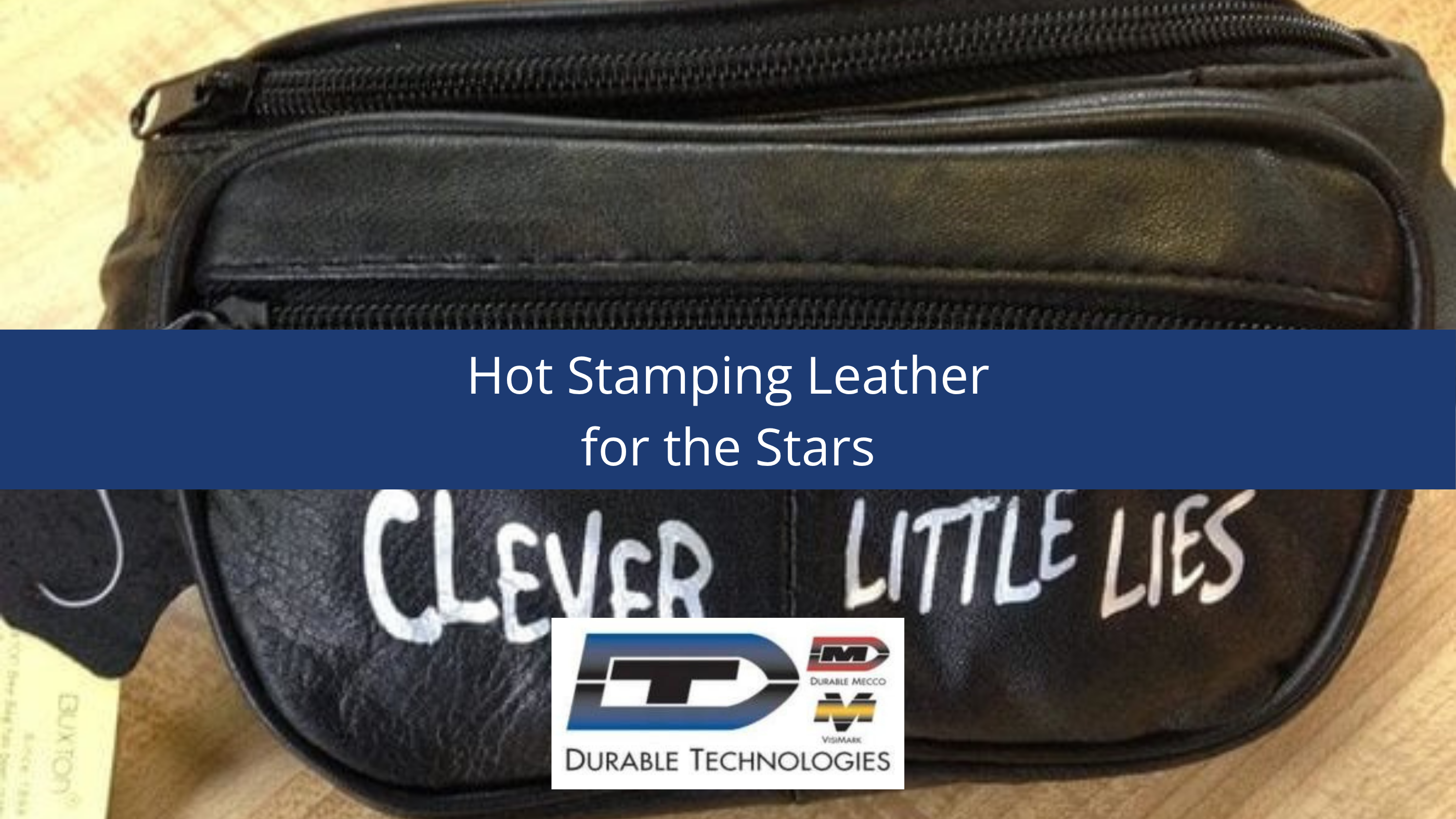
Custom hot stamping dies let brands press logos, monograms, and artwork into leather, paper, foil, and plastic for branded gifts and small-run promotional goods. When Marlo Thomas of That Girl fame wanted to surprise her off-Broadway cast with personalized opening-night fanny packs, she first looked to New York vendors. Nobody could deliver. She found her solution at Durable Technologies in Worcester, Massachusetts.
Quick Answer: Custom hot stamping dies are precision-engraved metal blocks used to press logos, monograms, artwork, or text into materials like leather, paper, foil, plastic, vinyl, and coated substrates. They create a sharp branded impression using heat and pressure, either with foil for a metallic or colored finish or as a blind deboss without foil.
This post walks through how custom hot stamping dies work, when to specify magnesium versus brass, the substrates that take a clean impression, and how a Hollywood actress sourced opening-night gifts that her cast actually wanted to keep.
What are custom hot stamping dies?
Custom hot stamping dies are precision-engraved metal blocks that transfer foil or a blind impression into a substrate using heat and pressure. The die holds a fixed image (a logo, monogram, date code, or piece of artwork) and presses that image into leather, paperboard, plastic, vinyl, or coated surfaces. The result is a sharp, tactile mark with color (if foil is used), or a clean debossed impression without it.
Brands specify custom dies whenever a logo or design needs to appear repeatedly on a physical product without printing. The look is premium. The mark survives handling, washing, and time. And pad printing or applied labels cannot match the feel of a properly executed hot stamp.
Why do brands use hot stamping for promotional gifts and small-run leather goods?
For limited runs (launch gifts, event swag, wedding favors, executive presents, cast and crew gifts) hot stamping hits the sweet spot. Tooling cost stays modest. The finished mark looks expensive. And once a brand owns the die, future runs cost almost nothing in setup.
Luxury leather has used hot stamping as the standard branding method for more than a century. Wallets, journals, belts, handbags, and yes, fanny packs all carry hot stamped logos. Foil colors run from metallic golds and silvers to matte blacks, whites, and custom Pantone matches. A blind deboss with no foil reads as understated and high-end, which is why leather houses like Royce Leather, Vianel Studios, and Vintage Editions specify the process for everyday production.
The economics work for small runs too. A die that marks a hundred opening-night gifts is the same die that could mark ten thousand wallets next year if the project scales.
When should you choose magnesium dies versus brass?
Die material gets specified based on run length, detail requirements, and how often the project will repeat.
Magnesium dies are the lowest-cost option and the fastest to produce. They etch quickly, hold reasonable detail, and work well for one-time projects or short runs in the hundreds to low thousands of impressions. For a single opening-night gift run, magnesium is the right call.
Brass dies cost more upfront and take longer to engrave, but they hold sharper detail and last 10 to 20 times longer than magnesium under production conditions. For brands that re-order the same gift item year after year, or for any ongoing production program, brass earns back its cost quickly on total cost of ownership. Fewer die replacements. Less downtime swapping tooling mid-run. A consistently sharper mark across thousands of impressions.
Steel dies sit at the top of the durability scale and are usually specified for longer production runs or for marking harder substrates where brass would wear faster.
How did Durable help Marlo Thomas create custom opening night gifts?
When Marlo Thomas of That Girl fame wanted to surprise her fellow actors and actresses in the off-Broadway comedy Clever Little Lies with an opening-night gift she first looked to New York vendors. Unable to find what she was looking for in the city, however, she eventually turned to Durable Technologies for a custom marking solution.
“When I opened off-Broadway in a fun comedy called Clever Little Lies, I wanted to give opening-night gifts to the whole team: fanny-packs emblazoned with the play’s logo. But I couldn’t find just what I wanted in New York. Well, thanks to Chris Podles at Durable Technologies in Worcester, MA—and Lynn and Jay Cann at Kwikprint in Jacksonville, FL—my clever little gift idea became a reality. And everybody loved it!” —Marlo Thomas
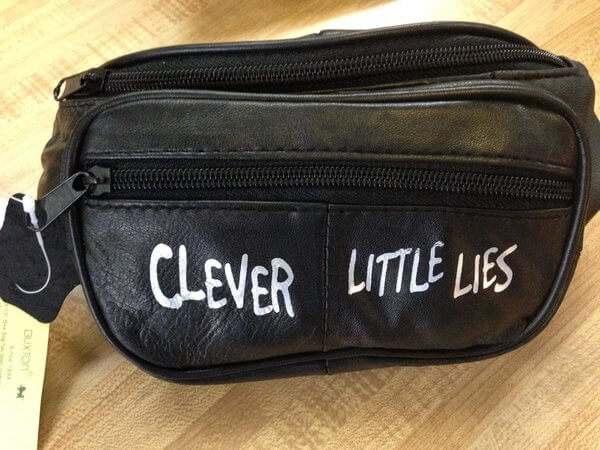
Durable provided the custom magnesium hot stamping dies that were used to deboss the silver foil into the fanny packs. While helping Mrs. Thomas, we discovered that this was not Durable's first brush with the Thomas family. In a strange turn of events, several years ago I was bumped from first class on a flight by Marlo's husband, Phil Donahue.
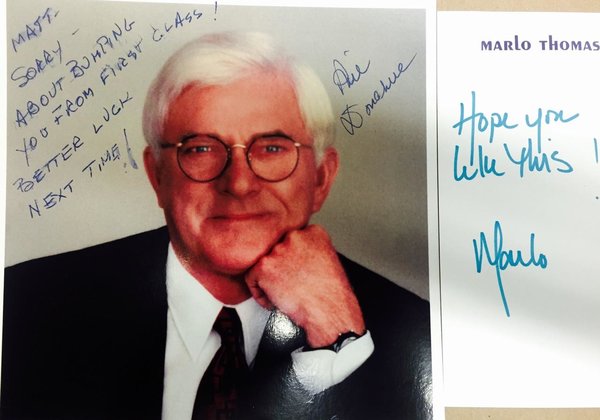
While we joked about this "six degrees" connection around the office, we never expected anything to come of the coincidence. Imagine my pleasant surprise when, along with Marlo Thomas' thank you note, I also received a personalized apology from Mr. Donahue! It truly is a small world.
What materials accept hot stamped logos and designs?
Hot stamping works across a wide range of substrates common to promotional, packaging, and gift programs. Leather (both genuine and bonded), paper and bookbinding stock, coated and uncoated paperboard, vinyl, PVC, polypropylene, ABS plastic, wood, and cork all accept clean hot stamped impressions with the right foil and machine settings.
Die material, foil type, dwell time, and pressure each get matched to the substrate. A leather fanny pack runs at different settings than a wood gift box or a vinyl-covered notebook. Application engineers work through those variables before the first die ships, which is why the first impression usually looks right rather than the fifth.
How do you order custom hot stamping dies for a branded project?
Custom dies start with artwork. Vector files (AI, EPS, or high-resolution PDF) work best. Send the logo or design, identify the substrate being marked, share the expected production volume, and note the type holder size if a press is already in place. Durable's team comes back with a recommendation on die material, sizing, and lead time.
Durable Technologies' custom brass and steel hot stamping dies are manufactured with wording or designs of your choice, in brass or steel, for hot stamping applications when the text remains constant. The logo dies are typically made type high (.918” / 23.3mm) and fit in almost all standard hot stamping type holders but can also be custom machined to any size to fit your unique typeholder.
Brands without an in-house press can pair their dies with tabletop hot stamping equipment from Kwikprint, the equipment line used by leather makers, bookbinders, packagers, and gift shops across the country.
More posts that might be of interest:
- Infinite Series Uses Durable Custom Stamping Dies for Leather
- Custom Engraved Brass Hot Stamping Dies
- Brass Hot Stamp Logo for Leather
View all of our blog posts about Hot Stamping.