


Glen Dobi, owner of Dobi Associates and developer of the CedarCraft product line of custom garden planters, needed a marking method that could keep pace with demanding retail customers while delivering the quality his brand required. Branding proved to be the answer.
For small manufacturers working with wood, branding offers something other marking methods cannot match: a permanent, tactile mark that becomes part of the wood itself. Unlike labels that peel or inks that fade, a branded mark actually burns into the wood grain. This creates a three-dimensional impression that customers can see and feel, which adds perceived value to handcrafted products.
Mr. Dobi explains his situation: "We work closely with a cedar mill to rescue small pieces of wood and engineer them into larger panels to build the CedarCraft line of garden planters. Our customers are the big box retail stores, and they are known for short lead times, lots of changes, and for being pretty demanding."
The CedarCraft team uses steel hot stamp dies and branding iron dies to permanently mark their cedar garden planters and cedar grilling planks with brand marks and use instructions. The marks withstand outdoor exposure, moisture, and handling throughout the product's lifetime.
What Temperature Should You Use for Branding Wood?
Getting the temperature right is one of the most critical factors in wood branding. Set it too low and you get a faint, inconsistent mark. Set it too high and you risk scorching the wood or creating an overly dark impression that obscures fine details.
Softwoods like cedar, pine, and fir brand well at temperatures between 650°F and 750°F. The lower density of these woods means they char more readily, so you can work at the lower end of this range and still achieve a clear, crisp mark. Cedar in particular responds well to moderate temperatures because its natural oils help conduct heat evenly across the branding surface.
Hardwoods require more heat. Species like oak, maple, and walnut typically need temperatures between 750°F and 850°F to achieve proper mark depth. The denser grain structure resists charring, so the additional heat compensates for this resistance.
A temperature regulator is worth the investment for any serious production work. The die-idle temperature of most branding irons runs well above the recommended branding temperature, and a regulator lets you dial in the exact setting for your specific wood species. This consistency pays dividends in mark quality and extends the service life of your heating element.
How Long Should a Branding Iron Contact Wood?
Dwell time—the duration the heated die remains in contact with the wood—works in tandem with temperature to determine mark quality. These two variables are interdependent, and experienced operators learn to balance them based on the specific requirements of each job.
Softwoods may need only a brief contact of two to four seconds at proper temperature. The goal is to char the surface fibers just enough to create a permanent impression without burning through to deeper layers. Watch for the moment when the wood darkens uniformly across the entire die face, then release.
Hardwoods demand more patience. Depending on the depth and darkness you want, contact times of ten seconds or longer are common. The key is maintaining steady, even pressure throughout the dwell period. Rushing this step produces shallow marks that may not survive sanding or finishing operations.
Longer dwell times create deeper marks, which can be desirable for larger patterns with characters 3/8" or bigger. Keep in mind that extended contact reduces die temperature more significantly, so you may need to increase your temperature setting for repetitive branding at slower cycle times. A deep brand in wood typically shows a brown halo around each character, giving the mark a bolder, more pronounced appearance.
What Die Material Works Best for Wood Branding?
Die material selection depends on your production volume and budget. Each option offers distinct advantages.
Brass dies represent the sweet spot for most small manufacturers. Brass conducts heat efficiently and resists the scaling that can develop on other metals at branding temperatures. The material machines cleanly, allowing for crisp detail reproduction in logos and fine text. For medium production runs—say, several hundred to several thousand pieces—brass delivers excellent value and consistent mark quality throughout its service life.
Steel dies are the choice when longevity matters most. Steel outlasts brass significantly in high-volume applications and maintains edge sharpness through extended production runs. The higher hardness makes steel ideal for applications where the die may contact abrasive surfaces or where mark depth requirements push the limits of softer materials. When you need a die that will perform identically on piece number 50,000 as it did on piece number one, steel is the answer.
Magnesium dies offer an economical entry point for short runs, prototyping, or testing new designs. The material costs less than brass or steel and machines quickly, making it practical for situations where you need to validate a design before committing to more expensive tooling. Many craftsmen start with magnesium to prove out a new logo or marking concept, then move to brass or steel for production.
What Makes a Good Branding Die Design for Wood?
The best branding results come from designs that account for how heat transfers into wood grain. Clean, simple designs consistently outperform complex artwork with fine details.
Avoid lines thinner than 1/64" or closely spaced elements that may blend together when heat spreads through the wood. Solid areas adjacent to fine detail can cause uneven heat distribution, resulting in some portions of the mark appearing darker or deeper than others.
Character sizing matters for legibility. Smaller text requires more precise temperature and dwell time control to prevent the letters from filling in or becoming illegible. Most production branding applications work best with characters 1/8" tall or larger, though skilled operators can achieve good results with smaller text on cooperative wood species.
The die face itself should have proper draft angles and depth for the material being branded. Durable Technologies' engraving craftsmen are experts in optimizing these parameters for wood applications, ensuring that what looks good in your artwork translates to a clear branded impression on the actual product.
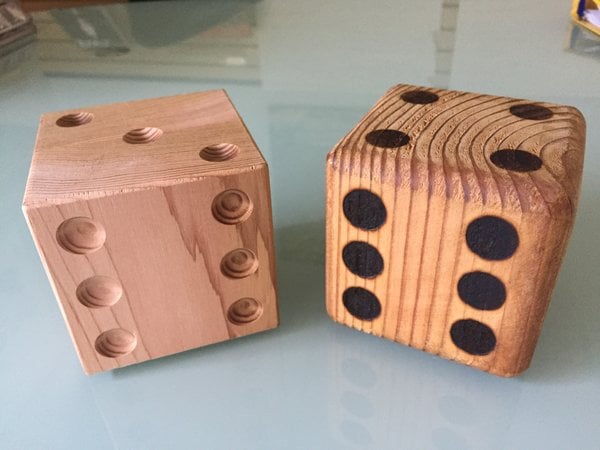
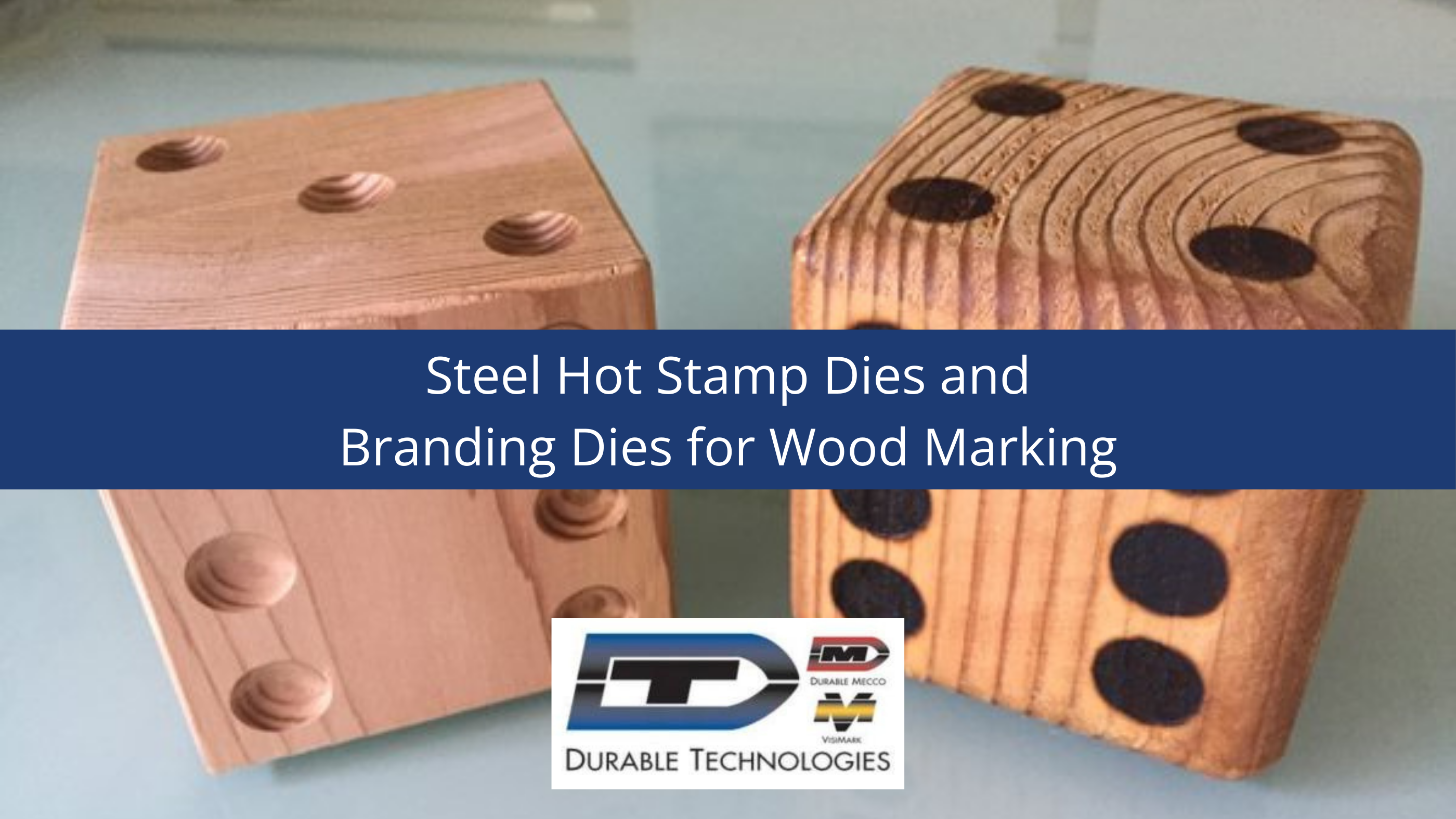
"We are developing other new product ideas, like the dice pictured above, that need branding and marking of text and numbers, and we are comfortable that Durable Technologies will be able to help us figure out these manufacturing and marking challenges," states Mr. Dobi.
Steel Hot Stamp Dies for Wood Applications
Our brass and steel printers' type styles fit any need for monogramming or personalizing in printers including Kingsley®, Kwikprint®, AAMStamp®, Kensol Franklin®, Jackson®, Gibson®, Howard®, and virtually any other hot stamping machine. Typical applications include book bindings, personalization items, ribbons, greeting cards, napkins, matchbooks, labels, leather goods, advertising specialty items, and wood products of all types.
High-quality brass type and dies far outlast cheap alloys such as zinc and lead type, making them a better long-term value despite higher initial cost. The difference becomes apparent after several hundred impressions when inferior materials begin showing wear that affects mark quality.
We offer same-day shipping on stock type in our News Gothic and News Gothic Condensed type styles. We maintain the largest inventory in the country of all-purpose straight body type in both brass and steel, used for a wide variety of hot stamping, coding, and imprinting applications.
Custom Branding Iron Dies
Branding is a practical and economical way to permanently mark almost any material other than metal or glass. Wood is frequently branded to advertise a trademark, logo, or manufacturer's name, or to sign and individualize a craftsman's work. Branding is also used to identify tools or equipment for personal or security purposes.
Custom dies can be produced from your artwork files, including Adobe Illustrator (preferred), DWG, DXF, and EPS formats. Our engineering team reviews each design for manufacturability and will recommend adjustments if certain elements may not translate well to the branding process.
Contact the experts at Durable Technologies for all of your steel hot stamp dies and branding iron dies needs.