


Anne Krawitz owns the AKA Bindery in Philadelphia specializing in custom clamshell boxes for valuable books and documents, as well as a full range of bookbinding, book conservation and restoration services. AKA Bindery caters to book dealers, libraries, and private collectors.
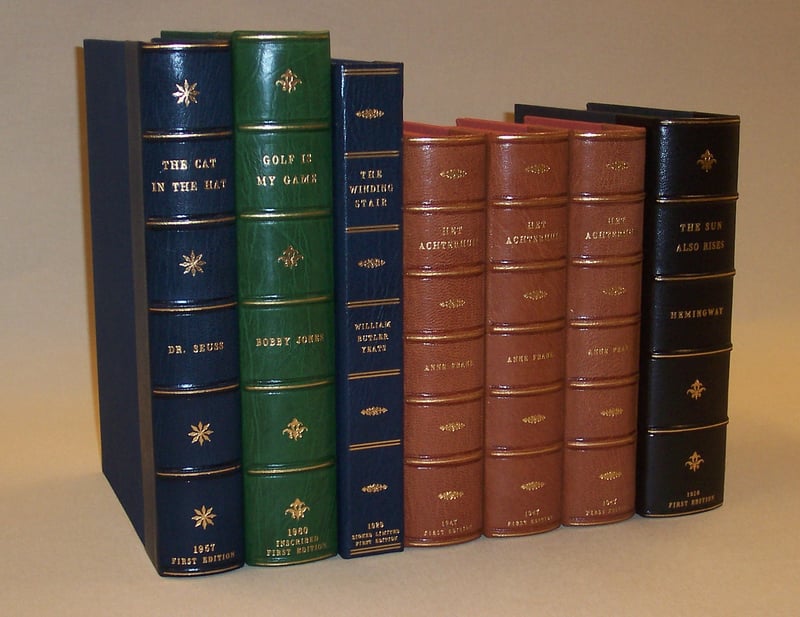 The art of bookbinding restoration demands more than technical skill—it requires matching historical techniques with modern precision. When a centuries-old book arrives at AKA Bindery, the restoration process often involves recreating the exact spine lettering, decorative elements, and period-appropriate designs that give these volumes their distinctive character. Hot stamping technology bridges this gap between historical authenticity and contemporary reliability.
Professional bookbinders face unique challenges when restoring antique volumes. The fonts used in 18th and 19th-century bookbinding often featured specialized typefaces that modern printing methods struggle to replicate accurately. The depth of impression, the subtle variations in character weight, and the way gold leaf or foil settles into leather grain all contribute to the authentic appearance that collectors and libraries expect.
What makes brass type essential for professional book restoration?
Durable Technologies recently made some custom brass type from a sample that AKA Bindery provided that needed to match a specific font for a book that she was restoring for a client.
"We needed an exact match on the text and numbers for this restoration, and we sent Durable the few pieces of old type that we had, and they were able to create a new set with an exact match. We are thrilled at the quality and consistency of the type," says Ms. Krawitz.
The precision required for historical font matching goes beyond simple character shape. Professional restoration work demands attention to serif angles, character spacing, and the distribution of weight within each letter. When restoring a book from the Victorian era, for instance, the distinctive flourishes and ornamental aspects of period typography become critical to maintaining authenticity.
Brass type excels in these applications because it maintains sharp edges and precise details through thousands of impressions. The metallurgical properties of brass allow for intricate engraving that captures even the subtle nuances of historical typefaces. Unlike softer metals that might round off or deform under pressure, brass holds its form impression after impression, ensuring that the hundredth restoration looks as crisp as the first.
Why do bookbinders choose hot stamping for personalization over other methods?
The personalization market within bookbinding extends far beyond simple monogramming. Today's collectors commission custom bookplates, family crests, and elaborate decorative borders that transform ordinary volumes into heirloom pieces. Private libraries often request consistent marking across entire collections, requiring type that can produce identical impressions across hundreds or thousands of books.
Hot stamping offers several advantages that make it the preferred choice for high-end bookbinding personalization. The process creates permanent impressions that won't fade, peel, or deteriorate over time—essential qualities for books intended to last generations. The ability to work with metallic foils adds an element of luxury that other marking methods cannot match, producing the gleaming gold or silver text traditionally associated with fine bookbinding.
Modern bookbinders also appreciate hot stamping's versatility in handling various leather types and synthetic materials. Whether working with delicate calfskin, robust cowhide, or contemporary vegan leather alternatives, hot stamping produces consistent results across different substrates. This flexibility becomes particularly valuable when creating matching sets where volumes might be bound in different materials due to availability or client preference.
The depth control possible with hot stamping allows bookbinders to create subtle embossed effects or bold debossed impressions depending on the project requirements. This range of expression enables craftspeople to match historical styles precisely or create contemporary designs that push the boundaries of traditional bookbinding aesthetics.
How does the hot stamping process work for clamshell boxes?
AKA Bindery uses a Kwikprint hot stamping press with the brass type to imprint the mark into the spines of their boxes. The Kwikprint press heats up the brass type so that it can permanently imprint the text, numbers, or graphic onto the leather.
The process of hot stamping clamshell boxes requires careful temperature control and precise pressure application. Clamshell boxes present unique challenges because they often feature multiple materials—leather spines, cloth-covered boards, and sometimes decorative paper elements. Each material responds differently to heat and pressure, requiring experienced operators to adjust their technique accordingly.
Temperature settings typically range between 250-350 degrees Fahrenheit for leather applications, though specific requirements vary based on leather type, thickness, and desired impression depth. The dwell time—how long the heated die remains in contact with the material—becomes critical for achieving consistent results. Too brief, and the impression lacks definition; too long, and the leather may scorch, or the surrounding materials might be damaged.
Professional bookbinders often develop specific protocols for different box styles. A full leather clamshell might require different settings than a quarter-bound box with cloth sides. The presence of padding beneath the covering material, the adhesive used in construction, and even ambient humidity can influence the hot stamping process, making experience and expertise essential for consistent results.
What personalization capabilities does hot stamping offer for custom bookbinding?
AKA Bindery uses text and decorative designs, including antique looking motifs, to decorate the clamshell boxes they make.
The range of personalization possible through hot stamping extends from simple ownership marks to elaborate artistic compositions. Contemporary bookbinders combine traditional ornamental borders with custom text to create designs that reflect both the book's content and the owner's personality. A clamshell box housing a collection of botanical illustrations might feature hot-stamped ivy borders intertwined with the collector's monogram, while a box protecting legal documents might display more formal, geometric patterns.
Hot stamping technology accommodates various artistic styles and cultural traditions. Gothic lettering for medieval manuscripts, Art Deco designs for jazz-age publications, or minimalist contemporary typography for modern first editions—each style requires specific die characteristics that brass type can faithfully reproduce. The ability to combine multiple dies in a single composition allows bookbinders to create layered designs with varying depths and textures.
Color options through foil selection add another dimension to personalization. Traditional gold remains popular for its timeless elegance, but modern foils offer metallic effects in copper, rose gold, and pewter, as well as pigmented options in virtually any color. Some bookbinders create subtle tone-on-tone effects by matching foil colors closely to leather colors, while others use contrasting colors for dramatic visual impact.
Special effects achievable through hot stamping include holographic foils that shift color with viewing angle, pearlescent finishes that add subtle shimmer, and matte foils that provide sophisticated understatement. These options allow bookbinders to match the personalization style to the book's character, the collection's theme, or the client's specific aesthetic preferences.
When should you invest in brass type versus alloy alternatives?
Brass type from Durable Technologies is an economical, all-purpose type for marking most materials such as books, leather, plastics, paper, and wood. Durable's brass type lasts longer than softer alloy metals like zinc and lead and stands up when stamping under heat and/or pressure like AKA Bindery does using a Kwikprint press. Brass type also delivers a much crisper, cleaner mark than lower cost alloy types. Alloy type may be less investment up front but ultimately the brass type is a much better long term investment.
The decision between brass and alloy type often comes down to production volume and quality requirements. For bookbinders managing regular restoration work or offering personalization services, the durability difference becomes apparent quickly. Where zinc type might show wear after 500-1000 impressions, brass type continues producing sharp impressions for thousands of uses. This longevity translates directly to consistency—critical when working on multi-volume sets or maintaining house style across numerous projects.
The metallurgical composition of brass provides superior heat transfer properties compared to softer alloys. This characteristic ensures more consistent heating across the type face, resulting in uniform impression depth even on textured leather or handmade papers with variable thickness. Alloy type, particularly lead-based options, can develop hot spots or cool zones that create uneven impressions, requiring frequent adjustments during production runs.
Professional bookbinders also consider the health and safety implications of their material choices. While lead type offers certain working characteristics, the potential health hazards associated with handling lead, especially when heated, make it increasingly uncommon in modern binderies. Brass type eliminates these concerns while providing superior performance characteristics.
What customization options exist for specialized restoration projects?
Custom logo dies can also be produced with any text or design, in brass or steel, for hot stamping requirements where your text remains consistent. Durable Technology's logo dies are usually made type high (.918" / 23.3mm) to fit in most standard type holders but can also be manufactured to any size to fit your existing equipment.
The customization possibilities for bookbinding applications extend beyond standard type to include reproduction of historical printer's marks, publishing house logos, and institutional crests. Libraries commissioning restoration work often require their institutional seal or ex libris designs reproduced exactly as they appeared in original bindings. This level of precision demands dies manufactured from artwork that might come from rubbings, photographs, or digital scans of damaged originals.
Modern manufacturing techniques allow for dies that combine multiple elements—text in various fonts, decorative borders, and pictorial elements—in a single pressing. This capability proves invaluable when restoring elaborate Victorian bindings or creating new boxes that must match existing collection aesthetics. The ability to work from various file formats, including Adobe Illustrator vectors, AutoCAD drawings, and high-resolution scans, ensures that even complex designs can be accurately reproduced.
For ongoing restoration projects, having custom dies manufactured ensures consistency across multiple volumes while reducing setup time for repeated designs. Institutional clients particularly value this efficiency when processing large collections requiring uniform treatment. The initial investment in custom dies pays dividends through faster turnaround times and guaranteed consistency across projects that might span months or years.
Steel dies offer even greater longevity than brass for extremely high-volume applications or when working with particularly challenging materials. While most bookbinding applications find brass more than adequate, binderies specializing in commercial work or handling hundreds of restoration projects annually might benefit from steel's superior durability. The choice between brass and steel often depends on balancing the higher initial cost of steel against the extended service life for high-volume operations.
Contact us today to see how we can help you make your mark using brass type and dies for your bookbinding, restoration, and personalization projects.